Every great project starts with an idea. Sometimes it arrives as a sudden flash of inspiration. Other times, it begins with a simple question: “What if we tried something different?” But having an idea is only the beginning. The real challenge is turning that idea into something useful, practical, and meaningful.
This is where concepting becomes important.
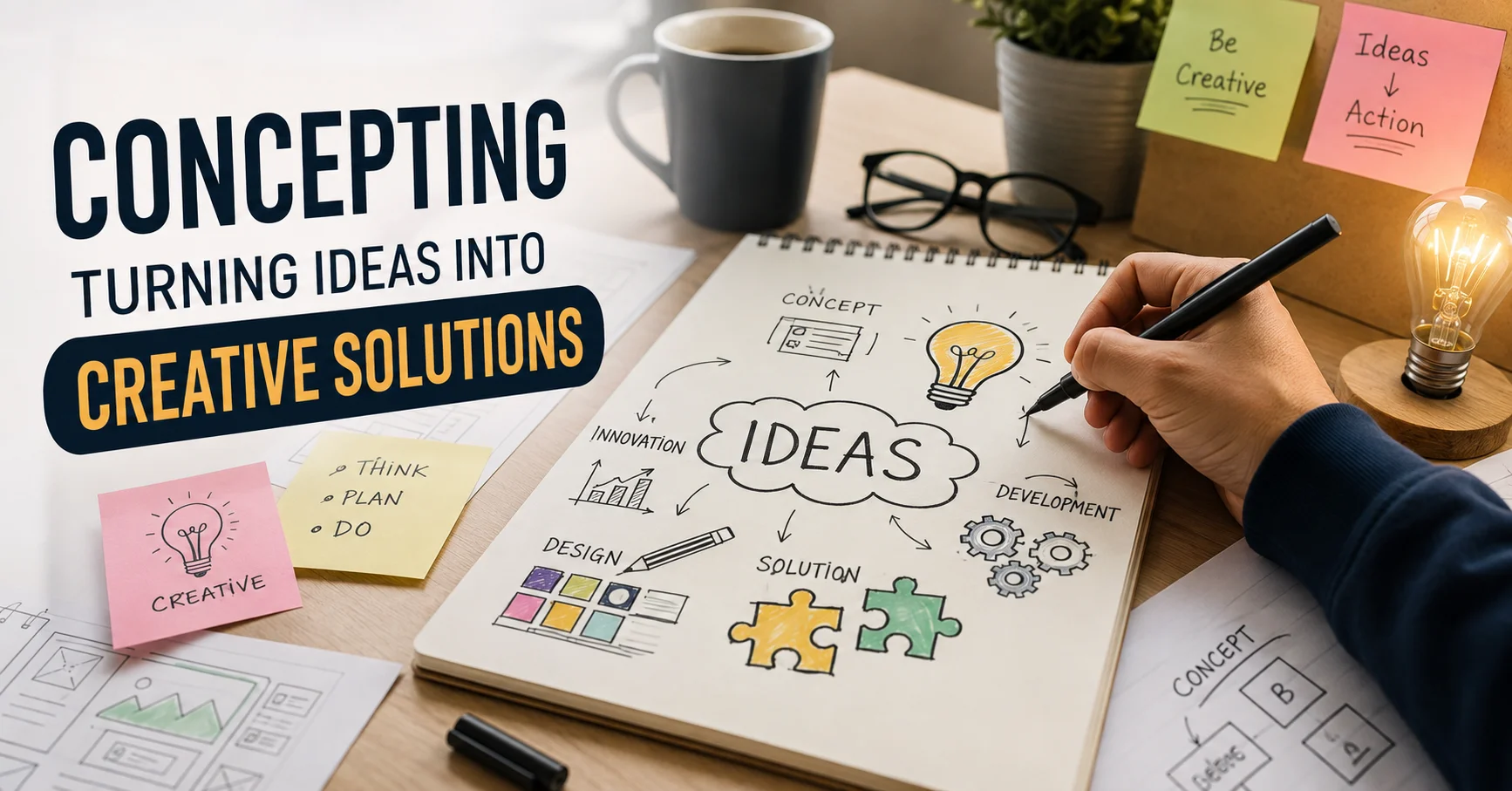
Concepting is the process of exploring ideas, developing possibilities, solving problems creatively, and shaping rough thoughts into clear concepts. It is widely used in creative industries, marketing, branding, product development, design, advertising, content creation, and business strategy. More importantly, it gives people a structured way to move from imagination to action.
Whether you are developing a new product, planning a campaign, designing an experience, or simply trying to solve a difficult problem, strong concepting can help you discover possibilities that may not be obvious at first.
ALSO READ: Neworldsmagazine.com: A Fresh Look At Today Digital World
What Makes Concepting Important?
Ideas are everywhere. People think of new ideas every day, but only a small number become successful solutions. The difference often comes down to how those ideas are developed.
Concepting creates space for exploration before a final decision is made. Instead of immediately choosing the first idea that sounds good, you can examine different directions, question assumptions, and identify opportunities for improvement.
A strong concept should do more than sound interesting. It should have a clear purpose and answer an actual need.
For example, imagine a company wants to create a reusable water bottle. The basic idea is simple, but concepting can take it much further. Should the bottle focus on portability? Sustainability? Temperature control? Fitness? Office workers? Travelers?
Each question creates a different creative direction.
This process helps teams understand not only what they could create but also why they should create it.
The Difference Between An Idea And A Concept
The words “idea” and “concept” are often used interchangeably, but there is an important difference.
An idea is usually a thought or possibility. A concept is a more developed version of that thought.
Consider this example:
“I want to create an app for learning languages.”
That is an idea.
“A mobile language-learning app that helps busy professionals practice for ten minutes a day through short conversations and personalized challenges.”
That is a concept.
The second statement gives the original idea direction. It identifies the audience, purpose, experience, and basic approach.
Concepting is essentially the bridge between these two stages.
It takes something broad and turns it into something that can be discussed, tested, improved, and eventually developed.
Start With The Problem
One of the most effective ways to begin concepting is to understand the problem before trying to create the solution.
Creative thinking can become much more productive when there is a clear challenge to solve.
Ask questions such as:
- What problem are we trying to solve?
- Who experiences this problem?
- Why does the problem matter?
- What are people currently doing to deal with it?
- What is missing from existing solutions?
- What would make the experience better?
These questions provide a foundation for the creative process.
Without a clear problem, concepting can easily become a collection of attractive but disconnected ideas. A concept may look impressive but fail to provide real value.
Starting with the problem keeps creativity focused.
Research Before Creating
Creativity does not happen in isolation. Good concepting often depends on understanding the environment surrounding the project.
Research can reveal customer expectations, industry trends, competitor approaches, common frustrations, and gaps in the market.
For a product concept, research might involve understanding how people currently use similar products. For a marketing campaign, it could mean studying the audience’s interests, language, habits, and motivations.
Research does not mean copying what already exists. Instead, it gives creative teams useful information from which they can build something different.
The goal is to discover opportunities.
Sometimes research confirms an original idea. Sometimes it completely changes the direction of the project. Both outcomes are valuable because they help prevent teams from spending time developing concepts that do not meet real needs.
Generate Many Ideas
One of the biggest mistakes in creative work is judging ideas too early.
During the initial concepting stage, quantity can be useful. The goal is to explore different possibilities rather than immediately identify the perfect answer.
A team might generate ten, twenty, or even fifty possible approaches to a single problem.
Some ideas will be practical. Others will be unusual. A few may seem impossible.
That is perfectly normal.
An unexpected idea can lead to a much stronger concept later. For this reason, brainstorming sessions should initially encourage open thinking.
Useful techniques include mind mapping, free writing, sketching, word association, “what if” questions, reverse thinking, and combining unrelated ideas.
For example, instead of asking, “How can we improve this product?” try asking:
“What would this product look like if convenience were the only priority?”
“What would happen if we removed the most common feature?”
“How could we make this experience twice as simple?”
“What would a completely different industry do with this problem?”
Changing the question can change the quality of the ideas.
Embrace Unexpected Thinking
Some of the strongest creative solutions begin with ideas that initially seem unusual.
Concepting should allow room for experimentation. If people are afraid that every suggestion must immediately be realistic, they may stop sharing their most creative thoughts.
An unusual idea can often be refined later.
For example, an original concept may be too expensive, too complicated, or technically difficult. Instead of rejecting it completely, ask what part of the idea is valuable.
Perhaps the technology is unrealistic, but the customer experience is excellent.
Perhaps the design is too expensive, but the underlying convenience could be achieved another way.
Creative development often involves separating the useful part of an idea from the limitations surrounding it.
Define The Audience
A concept becomes stronger when it is designed with a specific audience in mind.
Trying to create something for everyone can make the final result feel generic.
Ask:
Who is this for?
What do they care about?
What frustrates them?
What motivates them?
What would make them pay attention?
What would make them trust the solution?
Understanding the audience helps turn abstract creativity into something relevant.
For example, a fitness campaign aimed at professional athletes will probably have a very different tone from one designed for people who are exercising for the first time.
The core message may be similar, but the concept, language, visuals, and experience should reflect the audience.
Build The Core Concept
After exploring many possibilities, it is time to identify the strongest direction.
A useful concept should be easy to explain.
If you cannot describe the idea clearly, it may still need development.
A strong concept often includes four basic elements:
The problem: What needs to be solved?
The audience: Who needs the solution?
The idea: What is the creative approach?
The value: Why is this approach better or meaningful?
For example:
“Busy students struggle to maintain healthy eating habits. Our concept creates affordable five-minute meal kits designed specifically for students living in small spaces.”
This explanation is simple, but it provides direction.
Once the core concept is clear, designers, writers, marketers, developers, and other specialists can begin turning it into something tangible.
Use Storytelling To Strengthen A Concept
People respond to stories because stories make ideas easier to understand and remember.
Storytelling can give a concept emotional meaning.
Instead of simply saying that a product saves time, show how it changes someone’s daily routine.
Imagine a commuter who normally spends twenty minutes every morning preparing breakfast. A new service reduces that process to five minutes. Suddenly, the concept is not just about convenience. It is about giving someone fifteen extra minutes to relax, prepare for work, or spend with family.
The story explains the value.
This approach is especially useful in advertising, branding, product presentations, and marketing campaigns.
A concept becomes more memorable when people can imagine themselves inside it.
Create Simple Visuals
Concepting does not always require polished designs.
Simple sketches, diagrams, mood boards, rough layouts, and basic prototypes can help communicate an idea more effectively than a long explanation.
Visual thinking allows people to see relationships and identify problems earlier.
For example, a rough website layout can reveal that a navigation system is confusing before a developer spends time building it.
A simple packaging sketch can show that important information is difficult to see.
A storyboard can reveal that a campaign’s message does not flow naturally.
The purpose of early visuals is not perfection. It is learning.
Test The Concept Early
A concept should not remain inside a creative team’s head for too long.
Getting feedback early can save significant time and resources.
Share the concept with potential users, colleagues, stakeholders, or people who understand the problem. Ask them what they understand, what interests them, and what feels confusing.
Importantly, avoid asking only whether they “like” the idea.
People may say they like something without actually wanting to use it.
Better questions include:
“What do you think this is trying to solve?”
“What part seems most useful?”
“What would stop you from using it?”
“What would you change?”
“What feels unclear?”
These questions provide more useful information for improving the concept.
Learn From Failure
Not every concept will succeed.
In fact, failed concepts can be an important part of creative development.
A rejected idea can reveal a customer preference, technical limitation, communication problem, or overlooked opportunity.
Instead of viewing failure as wasted effort, treat it as information.
The goal of concepting is not to produce perfect ideas immediately. It is to gradually move toward a stronger solution.
This mindset encourages experimentation and reduces the fear of making mistakes.
Collaboration Makes Concepts Stronger
Creative work often improves when different perspectives come together.
A designer may notice a visual opportunity that a marketer misses. A developer may identify a technical limitation early. A customer-service professional may understand common user frustrations that others have overlooked.
Good collaboration does not mean everyone has the same opinion.
Healthy disagreement can be valuable when it is focused on improving the concept rather than proving who is right.
The best teams create an environment where people can challenge ideas respectfully.
Instead of asking, “Whose idea is this?” they ask, “How can we make this idea better?”
Avoid Common Concepting Mistakes
Concepting can become ineffective when the process loses focus.
One common mistake is falling in love with the first idea. A first idea may be good, but exploring alternatives can uncover something much stronger.
Another mistake is trying to solve everything at once. A concept with too many features, messages, or goals can become confusing.
Ignoring the audience is another problem. A concept can be creatively impressive while still being irrelevant to the people it is supposed to serve.
Finally, perfectionism can slow down the process. Early concepts should be flexible. They are meant to change.
The goal is progress, not perfection.
How To Make Concepting More Effective
A practical concepting process can be organized into a series of simple stages.
Start by defining the challenge. Make sure everyone understands what needs to be solved.
Next, gather useful information through research and observation.
Then generate multiple ideas without judging them too quickly.
After that, group similar ideas and identify the most promising directions.
Develop those directions into clearer concepts.
Create simple visuals, descriptions, prototypes, or examples.
Test the strongest concepts with relevant people.
Finally, use the feedback to refine the idea before moving into full development.
This approach creates a balance between freedom and structure.
Creativity needs freedom, but it also benefits from a clear process.
Concepting In Business And Marketing
Businesses use concepting to develop products, campaigns, services, customer experiences, and brand identities.
For marketing teams, concepting can transform a basic promotional message into a campaign with a recognizable creative idea.
For product teams, it can help identify new features or entirely new products.
For entrepreneurs, concepting can help turn a business opportunity into a clear value proposition.
The same principle applies across industries: understand the need, explore possibilities, develop the strongest direction, and test it before investing heavily.
The Future Of Creative Concepting
Technology is changing the way people develop ideas.
Digital collaboration tools, rapid prototyping, artificial intelligence, virtual environments, and data-driven research can make experimentation faster.
However, technology does not eliminate the need for human creativity.
Tools can help generate possibilities, organize information, or create early versions of an idea. Human judgment is still needed to determine whether a concept is meaningful, useful, ethical, practical, and emotionally relevant.
The future of concepting will likely involve a combination of technology and human insight.
The strongest creative professionals will not simply produce more ideas. They will know how to recognize valuable ideas and turn them into solutions that people genuinely appreciate.
Conclusion
Concepting is much more than brainstorming. It is the creative journey between a rough thought and a meaningful solution.
It begins with curiosity and questions, grows through research and experimentation, and becomes stronger through feedback and refinement. A successful concept does not need to be complicated. In many cases, the best solutions are simple ideas developed with a deep understanding of the problem and the people involved.
Whether you are building a product, creating a campaign, developing a brand, or solving an everyday challenge, concepting gives you a practical way to explore possibilities before committing to one direction.
The next time you have an idea, do not rush to decide whether it is good or bad. Ask better questions. Explore different possibilities. Build a rough version. Listen to feedback. Then improve it.
That is how an ordinary idea can become a creative solution.
FAQs
What is concepting?
Concepting is the process of developing, exploring, and refining ideas until they become clear and useful creative solutions.
Why is concepting important?
Concepting helps transform basic ideas into focused solutions while allowing teams to explore alternatives and identify better opportunities.
How does concepting start?
Concepting usually starts by defining a problem, understanding the audience, conducting research, and generating several possible ideas.
Can concepting be used outside creative industries?
Yes. Concepting can be used in business, technology, education, product development, marketing, services, and everyday problem-solving.
What makes a good concept?
A good concept solves a meaningful problem, serves a clear audience, communicates its value, and has enough potential to be developed into a practical solution.
ALSO READ: Stellabyss Realm: A Guide To Its Mysterious World

Emily Carter is a tech enthusiast who writes about PC cooling, hardware performance, and system optimization. She enjoys simplifying complex topics and helping readers make better tech decisions.